1. LinkList 概述
LinkedList类是List接口的实现类,它是一个集合,可以根据索引来随机的访问集合中的元素,还实现了Deque接口,它还是一个队列,可以被当成双端队列来使用。虽然LinkedList是一个List集合,但是它的实现方式和ArrayList是完全不同的,ArrayList的底层是通过一个动态的Object[]数组来实现的,而LinkedList的底层是通过链表来实现的,因此它的随机访问速度是比较差的,但是它的删除,插入操作会很快。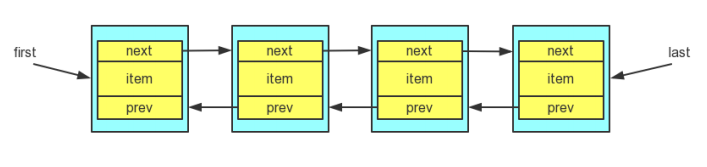
2. LinkList 实现
2.1 构造方法
public LinkedList() {}public LinkedList(Collection<? extends E> c) {this();addAll(c);}
LinkedList没有长度的概念,所以不存在容量不足的问题,因此不需要提供初始化大小的构造方法,因此值提供了两个方法,一个是无参构造方法,初始一个LinkedList对象,和将指定的集合元素转化为LinkedList构造方法。
2.2 Node节点
private static class Node<E> {E item;Node<E> next;Node<E> prev;Node(Node<E> prev, E element, Node<E> next) {this.item = element;this.next = next;this.prev = prev;}}
Node 是在 LinkedList 里定义的一个静态内部类,它表示链表每个节点的结构,包括一个数据域 item,一个后置指针 next,一个前置指针 prev。
2.3 add
public boolean add(E e) {linkLast(e);return true;}void linkLast(E e) {final Node<E> l = last;final Node<E> newNode = new Node<>(l, e, null);last = newNode;if (l == null)first = newNode;elsel.next = newNode;size++;modCount++;}
添加方法默认是添加到LinkedList的尾部,首先将last指定的节点赋值给l节点,然后新建节点newNode ,此节点的前驱指向l节点,data = e , next = null , 并将新节点赋值给last节点,它成为了最后一个节点,根据当前List是否为空做出相应的操作。若不为空将l的后继指针修改为newNodw。 size +1 , modCount+1;modCount: 此列表在结构上被修改的次数
2.4 remove
public boolean remove(Object o) {if (o == null) {for (Node<E> x = first; x != null; x = x.next) {if (x.item == null) {unlink(x);return true;}}} else {for (Node<E> x = first; x != null; x = x.next) {if (o.equals(x.item)) {unlink(x);return true;}}}return false;}
从该列表中删除指定元素的第一个匹配项(如果存在)。如果此列表不包含该元素,则它将保持不变。更正式地说,移除具有最低索引i的元素,以便(o==null?get(i)==null:o.equals(get(i))(如果存在这样的元素)。如果此列表包含指定的元素,则返回true(如果此列表因调用而更改,则返回等效值)。
E unlink(Node<E> x) {// assert x != null;final E element = x.item;final Node<E> next = x.next;final Node<E> prev = x.prev;if (prev == null) {first = next;} else {prev.next = next;x.prev = null;}if (next == null) {last = prev;} else {next.prev = prev;x.next = null;}x.item = null;size--;modCount++;return element;}
2.5 get
public E get(int index) {checkElementIndex(index);return node(index).item;}
Node<E> node(int index) {// assert isElementIndex(index);if (index < (size >> 1)) {Node<E> x = first;for (int i = 0; i < index; i++)x = x.next;return x;} else {Node<E> x = last;for (int i = size - 1; i > index; i--)x = x.prev;return x;}}
位运算与直接做除法的区别。先将index与长度size的一半比较,如果index
2.5 总结
LinkedList是一个功能很强大的类,可以被当作List集合,双端队列和栈来使用。LinkedList底层使用链表来保存集合中的元素,因此随机访问的性能较差,但是插入删除时性能非常的出色。LinkedList在1.8版本有添加了一点新的内容,添加了一个static final 修饰的内部类LLSpliterator 并实现了Spliterator ,为了实现并行遍历而新添加的功能,整体的变化并不是很大。

若有收获,就点个赞吧
0 人点赞


