1.File类
1.1 File类概述和构造方法【应用】
- File类介绍
- 它是文件和目录路径名的抽象表示
- 文件和目录是可以通过File封装成对象的
- 对于File而言,其封装的并不是一个真正存在的文件,仅仅是一个路径名而已.它可以是存在的,也可以是不存在的.将来是要通过具体的操作把这个路径的内容转换为具体存在的
File类的构造方法 | 方法名 | 说明 | | —- | —- | | File(String pathname) | 根据字符串路径创建一个File对象 | | File(String parent, String child) | 根据字符串父级路径和子级路径创建File对象 | | File(File parent, String child) | 根据File类型父级路径和字符串子级路径创建File对象 |
示例代码
public class FileDemo01 {public static void main(String[] args) {//通过将给定的路径名字符串转换为抽象路径名来创建新的 File实例File f1 = new File("E:\\itcast\\java.txt");System.out.println(f1);//从父路径名字符串和子路径名字符串创建新的 File实例File f2 = new File("E:\\itcast","java.txt");System.out.println(f2);//从父抽象路径名和子路径名字符串创建新的 File实例File f3 = new File("E:\\itcast");File f4 = new File(f3,"java.txt");System.out.println(f4);}}
1.2 绝对路径和相对路径【理解】
- 绝对路径
是一个完整的路径,从盘符开始 - 相对路径
是一个简化的路径,相对当前项目下的路径 示例代码
public class FileDemo02 {public static void main(String[] args) {// 是一个完整的路径,从盘符开始File file1 = new File("D:\\itheima\\a.txt");// 是一个简化的路径,从当前项目根目录开始File file2 = new File("a.txt");File file3 = new File("模块名\\a.txt");}}
//绝对路径File file = new File("E:\\idea_project\\javase_advance\\day_11\\file\\demo01.txt");System.out.println(file.getAbsolutePath());//相对路径File file1 = new File("day_11\\file\\demo01.txt");System.out.println(file1.getAbsolutePath());//磁盘根目录File file2 = new File("\\day_11\\file\\demo01.txt");System.out.println(file2.getAbsolutePath());
1.3 File类创建功能【应用】
方法分类 | 方法名 | 说明 | | —- | —- | | public boolean createNewFile() | 创建一个新空文件 | | public boolean mkdir() | 创建单级文件夹 | | public boolean mkdirs() | 创建多级文件夹 |
示例代码 ```java public class FileDemo02 { public static void main(String[] args) throws IOException {
//method1();//method2();//method2();
}
//1.如果文件存在,那么创建失败,返回false //2.如果文件不存在,那么创建成功,返回true //3.createNewFile方法不管调用者有没有后缀名,只能创建文件. private static void method1() throws IOException {
File file1 = new File("C:\\itheima\\aaa");boolean result1 = file1.createNewFile();System.out.println(result1);
}
//1.只能创建单级文件夹,不能创建多级文件夹 //2.不管调用者有没有后缀名,只能创建单级文件夹 private static void method2() {
File file = new File("C:\\itheima\\aaa");boolean result = file.mkdir();System.out.println(result);
}
//1.可以创建单级文件夹,也可以创建多级文件夹 //2.不管调用者有没有后缀名,只能创建单级文件夹 private static void method3() {
File file = new File("C:\\itheima\\aaa\\bbb\\ccc");boolean result = file.mkdirs();System.out.println(result);
}
<a name="4b370d0d"></a>### 1.4 File类删除功能【应用】- 方法分类| 方法名 | 说明 || --- | --- || public boolean delete() | 删除文件或文件夹 |- 删除方法注意事项:- delete方法直接删除不走回收站- 如果删除的是一个文件,直接删除- 如果删除的是一个文件夹,需要先删除文件夹中的内容,最后才能删除文件夹- 示例代码```javapublic class FileDemo03 {public static void main(String[] args) {//注意点://1.不走回收站的.//2.如果删除的是文件,那么直接删除.如果删除的是文件夹,那么能删除空文件夹//3.如果要删除一个有内容的文件夹,只能先进入到这个文件夹,把里面的内容全部删除完毕,才能再次删除这个文件夹//简单来说://只能删除文件和空文件夹.public static void main(String[] args) {//method1();method2();}//删除文件private static void method1() {File file = new File("d:\\itheima\\a.txt");boolean result = file.delete();System.out.println(result);}//删除非空目录private static void method2() {File file = new File("d:\\itheima");boolean result = file.delete();System.out.println(result);}}}
1.5 File类判断和获取功能【应用】
判断功能 | 方法名 | 说明 | | —- | —- | | public boolean isDirectory() | 测试此抽象路径名表示的File是否为目录 | | public boolean isFile() | 测试此抽象路径名表示的File是否为文件 | | public boolean exists() | 测试此抽象路径名表示的File是否存在 |
获取功能 | 方法名 | 说明 | | —- | —- | | public String getAbsolutePath() | 返回此抽象路径名的绝对路径名字符串 | | public String getPath() | 将此抽象路径名转换为路径名字符串 | | public String getName() | 返回由此抽象路径名表示的文件或目录的名称 |
示例代码
/*** File的判断和获取功能*/public class MainClass {public static void main(String[] args) throws IOException {File f = new File("day_11\\lv.txt");//测试此抽象路径名表示的File是否为目录System.out.println(f.isDirectory());//测试此抽象路径名表示的File是否为文件System.out.println(f.isFile());//测试此抽象路径名表示的File是否存在System.out.println(f.exists());//返回此抽象路径名的绝对路径名字符串System.out.println(f.getAbsolutePath());//将此抽象路径名转换为路径名字符串System.out.println(f.getPath());//返回由此抽象路径名表示的文件或目录的名称System.out.println(f.getName());System.out.println("--------");}}
1.6 File的FileList方法【应用】
- File[] listFiles(): 获取文件夹下的所有文件和文件夹对象,封装到File数组中返回
- listFiles方法注意事项
- 当调用者不存在时,返回null
- 当调用者是一个文件时,返回null
- 当调用者是一个空文件夹时,返回一个长度为0的数组
- 当调用者是一个有内容的文件夹时,将里面所有文件和文件夹的路径放在File数组中返回
- 当调用者是一个有隐藏文件的文件夹时,将里面所有文件和文件夹的路径放在File数组中返回,包含隐藏内容
- 当调用者是一个需要权限才能进入的文件夹时,返回null
- 示例代码
/*** File的listFile方法*/public class MainClass {public static void main(String[] args) {File file = new File("D:\\Tools");File[] files = file.listFiles();for (File f : files) {System.out.println(f);}}}
1.7 File类练习一【应用】
- 案例需求
在当前模块下的aaa文件夹中创建一个a.txt文件 - 实现步骤
- 创建File对象,指向aaa文件夹
- 判断aaa文件夹是否存在,如果不存在则创建
- 创建File对象,指向aaa文件夹下的a.txt文件
- 创建这个文件
- 代码实现
public class Test1 {public static void main(String[] args) throws IOException {//1.创建File对象,指向aaa文件夹File file = new File("filemodule\\aaa");//2.判断aaa文件夹是否存在,如果不存在则创建if(!file.exists()){//如果文件夹不存在,就创建出来file.mkdirs();}//3.创建File对象,指向aaa文件夹下的a.txt文件File newFile = new File(file,"a.txt");//4.创建这个文件newFile.createNewFile();}}
1.8 File类练习二【应用】
- 案例需求
删除一个多级文件夹 - 实现步骤
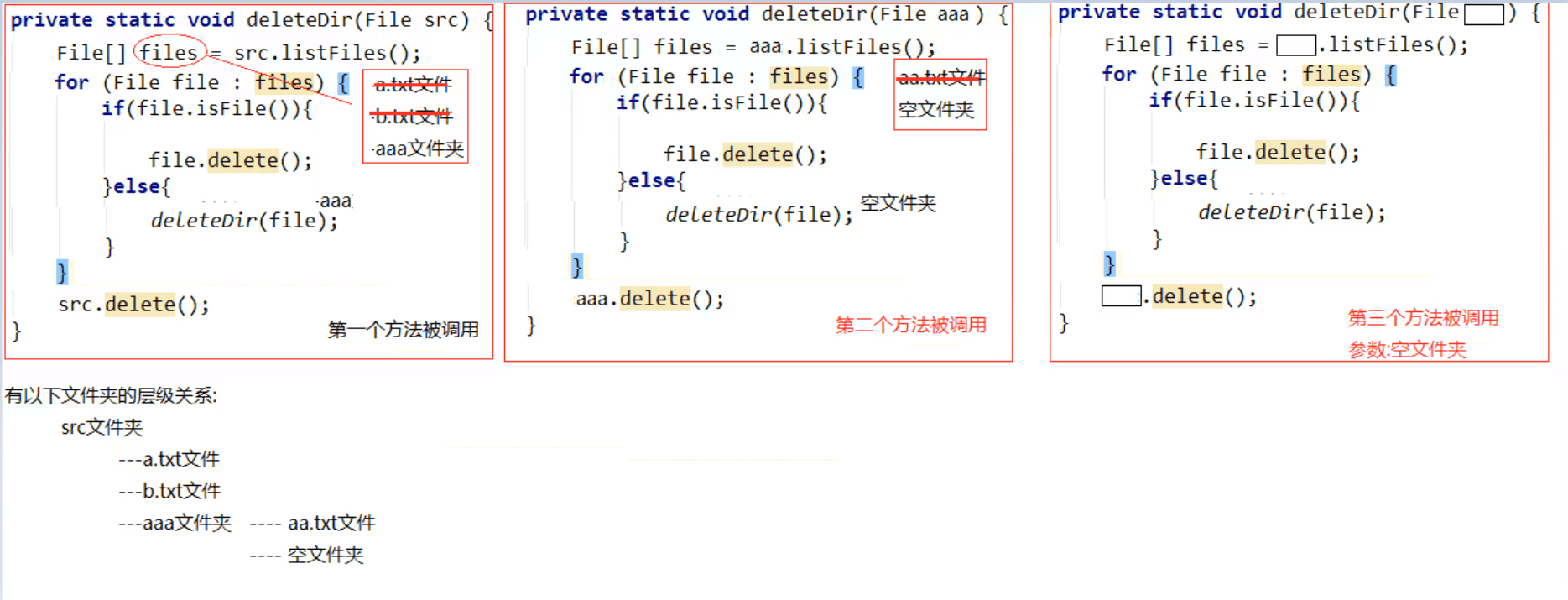
- 定义一个方法,接收一个File对象
- 遍历这个File对象,获取它下边的每个文件和文件夹对象
- 判断当前遍历到的File对象是文件还是文件夹
- 如果是文件,直接删除
- 如果是文件夹,递归调用自己,将当前遍历到的File对象当做参数传递
- 参数传递过来的文件夹File对象已经处理完成,最后直接删除这个空文件夹
代码实现
public class Test2 {public static void main(String[] args) {//练习二:删除一个多级文件夹//delete方法//只能删除文件和空文件夹.//如果现在要删除一个有内容的文件夹?//先删掉这个文件夹里面所有的内容.//最后再删除这个文件夹File src = new File("C:\\Users\\apple\\Desktop\\src");deleteDir(src);}//1.定义一个方法,接收一个File对象private static void deleteDir(File src) {//先删掉这个文件夹里面所有的内容.//递归 方法在方法体中自己调用自己.//注意: 可以解决所有文件夹和递归相结合的题目//2.遍历这个File对象,获取它下边的每个文件和文件夹对象File[] files = src.listFiles();//3.判断当前遍历到的File对象是文件还是文件夹for (File file : files) {//4.如果是文件,直接删除if(file.isFile()){file.delete();}else{//5.如果是文件夹,递归调用自己,将当前遍历到的File对象当做参数传递deleteDir(file);//参数一定要是src文件夹里面的文件夹File对象}}//6.参数传递过来的文件夹File对象已经处理完成,最后直接删除这个空文件夹src.delete();}}
思路解析
1.8 File类练习三【应用】
案例需求
统计一个文件夹中每种文件的个数并打印
打印格式如下:txt:3个doc:4个jpg:6个…
实现步骤
- 定义一个方法,参数是HashMap集合用来统计次数和File对象要统计的文件夹
- 遍历File对象,获取它下边的每一个文件和文件夹对象
- 判断当前File对象是文件还是文件夹
- 如果是文件,判断这种类型文件后缀名在HashMap集合中是否出现过
- 没出现过,将这种类型文件的后缀名存入集合中,次数存1
- 出现过,获取这种类型文件的后缀名出现的次数,对其+1,在存回集合中
- 如果是文件夹,递归调用自己,HashMap集合就是参数集合,File对象是当前文件夹对象
代码实现
public class Test3 {public static void main(String[] args) {//统计一个文件夹中,每种文件出现的次数.//统计 --- 定义一个变量用来统计. ---- 弊端:同时只能统计一种文件//利用map集合进行数据统计,键 --- 文件后缀名 值 ---- 次数File file = new File("filemodule");HashMap<String, Integer> hm = new HashMap<>();getCount(hm, file);System.out.println(hm);}//1.定义一个方法,参数是HashMap集合用来统计次数和File对象要统计的文件夹private static void getCount(HashMap<String, Integer> hm, File file) {//2.遍历File对象,获取它下边的每一个文件和文件夹对象File[] files = file.listFiles();for (File f : files) {//3.判断当前File对象是文件还是文件夹if(f.isFile()){//如果是文件,判断这种类型文件后缀名在HashMap集合中是否出现过String fileName = f.getName();String[] fileNameArr = fileName.split("\\.");if(fileNameArr.length == 2){String fileEndName = fileNameArr[1];if(hm.containsKey(fileEndName)){//出现过,获取这种类型文件的后缀名出现的次数,对其+1,在存回集合中Integer count = hm.get(fileEndName);//这种文件又出现了一次.count++;//把已经出现的次数给覆盖掉.hm.put(fileEndName,count);}else{// 没出现过,将这种类型文件的后缀名存入集合中,次数存1hm.put(fileEndName,1);}}}else{//如果是文件夹,递归调用自己,HashMap集合就是参数集合,File对象是当前文件夹对象代码实现getCount(hm,f);}}}}
2.字节流
2.1 IO流概述和分类【理解】
- IO流介绍
- IO:输入/输出(Input/Output)
- 流:是一种抽象概念,是对数据传输的总称.也就是说数据在设备间的传输称为流,流的本质是数据传输
- IO流就是用来处理设备间数据传输问题的.常见的应用: 文件复制; 文件上传; 文件下载
- IO流的分类
- 按照数据的流向
- 输入流:读数据
- 输出流:写数据
- 按照数据类型来分
- 字节流
- 字节输入流
- 字节输出流
- 字符流
- 字符输入流
- 字符输出流
- 字节流
- 按照数据的流向
- IO流的使用场景
- 如果操作的是纯文本文件,优先使用字符流
- 如果操作的是图片、视频、音频等二进制文件,优先使用字节流
- 如果不确定文件类型,优先使用字节流.字节流是万能的流
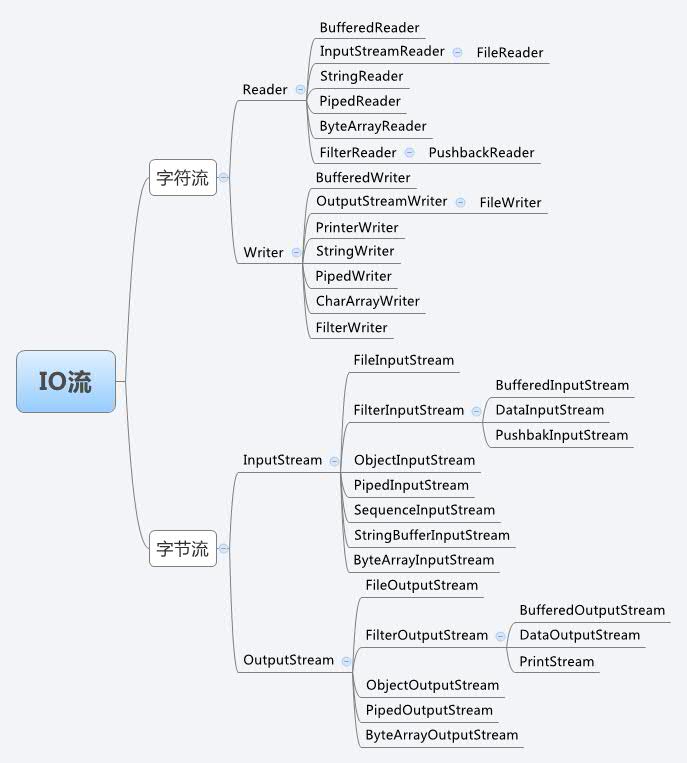
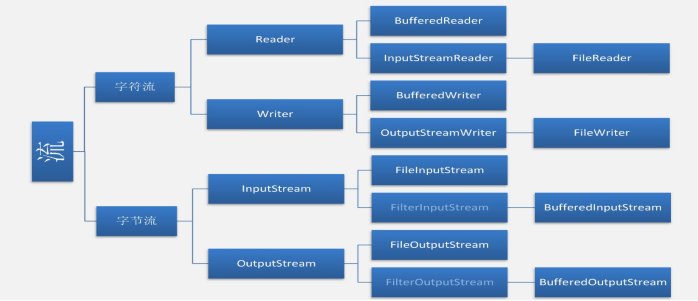
- 这么庞大的体系里面,常用的就那么几个,我们把它们抽取出来,如下图:
2.2 字节流写数据【应用】
- 字节流抽象基类
- InputStream:这个抽象类是表示字节输入流的所有类的超类
- OutputStream:这个抽象类是表示字节输出流的所有类的超类
- 子类名特点:子类名称都是以其父类名作为子类名的后缀
- 字节输出流
- FileOutputStream(String name):创建文件输出流以指定的名称写入文件
- 使用字节输出流写数据的步骤
- 创建FileOutputStream对象,关联到一个文件路径
- 调用write()方法,写出数据
- 调用close()方法,释放资源
示例代码
public class FileOutputStreamDemo01 {public static void main(String[] args) throws IOException {//创建字节输出流对象/*注意点:1.如果文件不存在,会帮我们创建2.如果文件存在,会把文件清空*///FileOutputStream(String name):创建文件输出流以指定的名称写入文件FileOutputStream fos = new FileOutputStream("myByteStream\\fos.txt");//void write(int b):将指定的字节写入此文件输出流fos.write(97);// fos.write(57);// fos.write(55);//最后都要释放资源//void close():关闭此文件输出流并释放与此流相关联的任何系统资源。fos.close();}}
注意事项
1.如果目的地指向的文件不存在,会自动帮我们创建
2.如果存在,会先将文件清空,在进行写入数据
3.通过IO流操作文件后,必须关流释放资源,否则文件会一直被占用
2.3 字节流一次写多个数据【应用】
写数据的方法分类 | 方法名 | 说明 | | —- | —- | | void write(int b) | 将指定的字节写入此文件输出流 一次写一个字节数据 | | void write(byte[] b) | 将 b.length字节从指定的字节数组写入此文件输出流 一次写一个字节数组数据 | | void write(byte[] b, int off, int len) | 将 len字节从指定的字节数组开始,从偏移量off开始写入此文件输出流 一次写一个字节数组的部分数据 |
示例代码
public class FileOutputStreamDemo02 {public static void main(String[] args) throws IOException {FileOutputStream fos = new FileOutputStream("bytestream\\a.txt");/*byte [] bys = {97,98,99};fos.write(bys);*/byte [] bys = {97,98,99,100,101,102,103};fos.write(bys,1,2);fos.close();}
2.4 字节流写数据的两个小问题【应用】
- 字节流写数据如何实现换行
- windows:\r\n
- linux:\n
- mac:\r
- 字节流写数据如何实现追加写入
- public FileOutputStream(String name,boolean append)
- 创建文件输出流以指定的名称写入文件。如果第二个参数为true ,则字节将写入文件的末尾而不是开头
示例代码
public class FileOutputStreamDemo03 {public static void main(String[] args) throws IOException {//创建字节输出流对象// FileOutputStream fos = new FileOutputStream("myByteStream\\fos.txt");FileOutputStream fos = new FileOutputStream("myByteStream\\fos.txt",true);//写数据for (int i = 0; i < 10; i++) {fos.write("hello".getBytes());fos.write("\r\n".getBytes());}//释放资源fos.close();}}
2.5 字节流写数据加异常处理【应用】
异常处理格式
try-catch-finally
try{可能出现异常的代码;}catch(异常类名 变量名){异常的处理代码;}finally{执行所有清除操作;}
finally特点
- 被finally控制的语句一定会执行,除非JVM退出
- 示例代码
public class FileOutputStreamDemo04 {public static void main(String[] args) {//加入finally来实现释放资源FileOutputStream fos = null;try {fos = new FileOutputStream("myByteStream\\fos.txt");fos.write("hello".getBytes());} catch (IOException e) {e.printStackTrace();} finally {if(fos != null) {try {fos.close();} catch (IOException e) {e.printStackTrace();}}}}}
2.6 字节输出流小结【应用】
- 创建字节输出流对象,构造方法中传入目的地文件路径
- 如果文件不存在,会自动帮我们创建
- 如果文件存在,会先清空,在写入数据,如果不想被清空,第二个参数传true
- 写出数据
- 可以一次写一个字节,可以一次写一个字节数组,可以一次写一个字节数组的一部分
- 写入换行: \r\n
- 关闭流,释放资源
2.7 字节流读数据(一次读一个字节数据)【应用】
- 字节输入流
- FileInputStream(String name):通过打开与实际文件的连接来创建一个FileInputStream,该文件由文件系统中的路径名name命名
- 字节输入流读取数据的步骤
- 创建字节输入流对象
- 调用字节输入流对象的读数据方法
- 释放资源
示例代码
public class FileInputStreamDemo01 {public static void main(String[] args) throws IOException {//创建字节输入流对象FileInputStream fis = new FileInputStream("myByteStream\\fos.txt");int read = fis.read();System.out.println((char)read);fis.close();//释放资源fis.close();}}
2.8 字节流-读取多个字节【应用】
读取文件中多个字节重要步骤
1.创建FileInputStream对象,关联文件2.通过循环读取文件,调用read()方法3.如果读取到的是-1,则停止循环4.调用close()方法释放资源
示例代码
public class OutputDemo8 {public static void main(String[] args) throws IOException {FileInputStream fis = new FileInputStream("bytestream\\a.txt");//1,文件中多个字节我怎么办?/*while(true){int i1 = fis.read();System.out.println(i1);}*/int b;while ((b = fis.read())!=-1){System.out.println((char) b);}fis.close();}}
2.9 字节流复制文件【应用】
- 案例需求
把“E:\itcast\窗里窗外.txt”复制到模块目录下的“窗里窗外.txt” (文件可以是任意文件) - 实现步骤
- 复制文本文件,其实就把文本文件的内容从一个文件中读取出来(数据源),然后写入到另一个文件中(目的地)
- 数据源:
E:\itcast\窗里窗外.txt —- 读数据 —- InputStream —- FileInputStream - 目的地:
myByteStream\窗里窗外.txt —- 写数据 —- OutputStream —- FileOutputStream
代码实现
public class CopyTxtDemo {public static void main(String[] args) throws IOException {//根据数据源创建字节输入流对象FileInputStream fis = new FileInputStream("E:\\itcast\\窗里窗外.txt");//根据目的地创建字节输出流对象FileOutputStream fos = new FileOutputStream("myByteStream\\窗里窗外.txt");//读写数据,复制文本文件(一次读取一个字节,一次写入一个字节)int by;while ((by=fis.read())!=-1) {fos.write(by);}//释放资源fos.close();fis.close();}}
2.10 字节流-文件复制(一次读一个字节数组数据)【应用】
- 一次读一个字节数组的方法
- public int read(byte[] b):从输入流读取最多b.length个字节的数据
- 返回的是读入缓冲区的总字节数,也就是实际读取字节个数
示例代码
public class CopyJpgDemo {public static void main(String[] args) throws IOException {//根据数据源创建字节输入流对象FileInputStream fis = new FileInputStream("E:\\itcast\\mn.jpg");//根据目的地创建字节输出流对象FileOutputStream fos = new FileOutputStream("myByteStream\\mn.jpg");//读写数据,复制图片(一次读取一个字节数组,一次写入一个字节数组)byte[] bys = new byte[1024];int len;//实际读取字节个数while ((len=fis.read(bys))!=-1) {fos.write(bys,0,len);}//释放资源fos.close();fis.close();}}
2.11 小数组拷贝原理【理解】
注意:变量len接收的返回值不是数组的长度,而是数组中真正存储数据的个数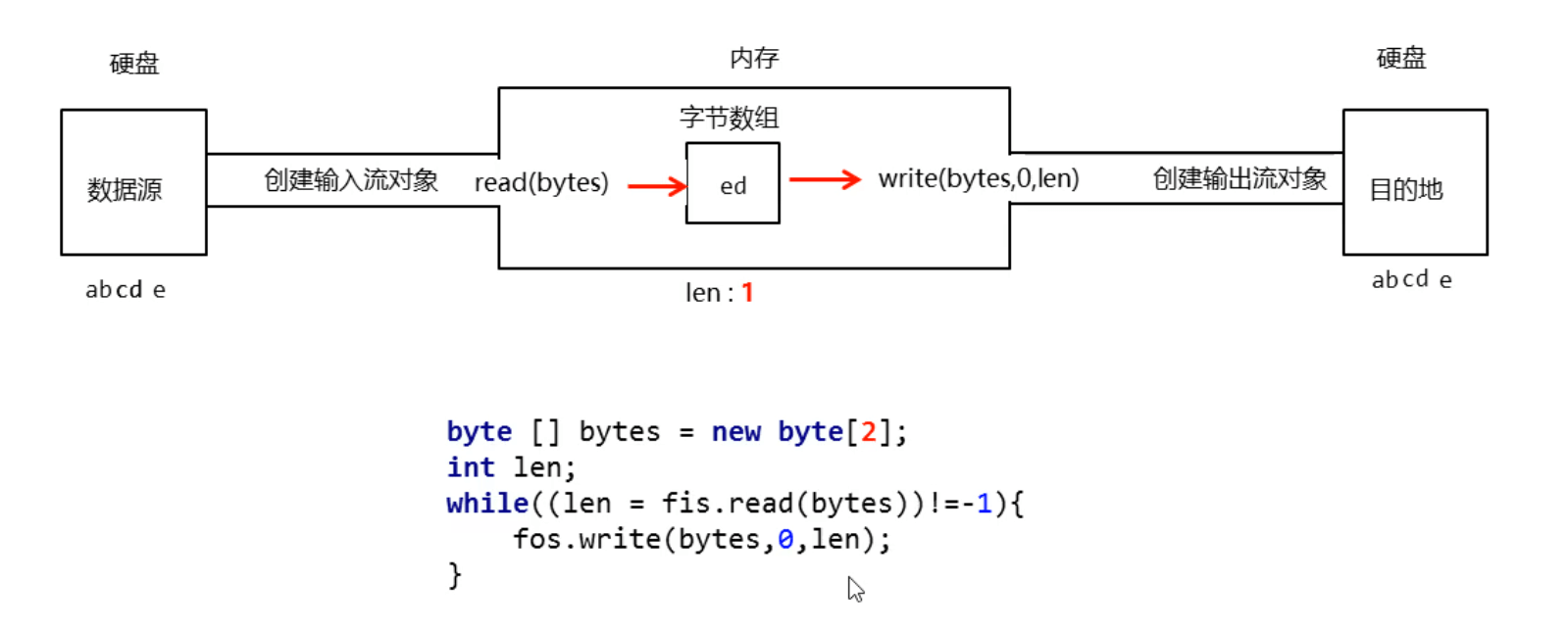
3.字节缓冲流
3.1 字节缓冲流构造方法【应用】
字节缓冲流:
- BufferedOutputStream: 字节缓冲输出流
- BufferedInputStream: 字节缓冲输入流
构造方法:
- 字节缓冲输出流: BufferedOutputStream(OutputStream out)
- 字节缓冲输入流: BufferedInputStream(InputStream in)
读和写的方法:
- BufferedOutputStream: 从父类OutputStream继承写的方法
- BufferedInputStream: 从父类InputStream继承读的方法
示例代码
/*** 缓冲流-一次读写一个字节*/public class MainClass {public static void main(String[] args) throws IOException {//就要利用缓冲流去拷贝文件//创建一个字节缓冲输入流//在底层创建了一个默认长度为8192的字节数组。BufferedInputStream bis = new BufferedInputStream(new FileInputStream("day_11\\file\\test.avi"));//创建一个字节缓冲输出流//在底层也创建了一个默认长度为8192的字节数组。BufferedOutputStream bos = new BufferedOutputStream(new FileOutputStream("day_11\\file\\copyBuf.avi"));int b;while ((b = bis.read()) != -1) {bos.write(b);}bis.close();bos.close();}}
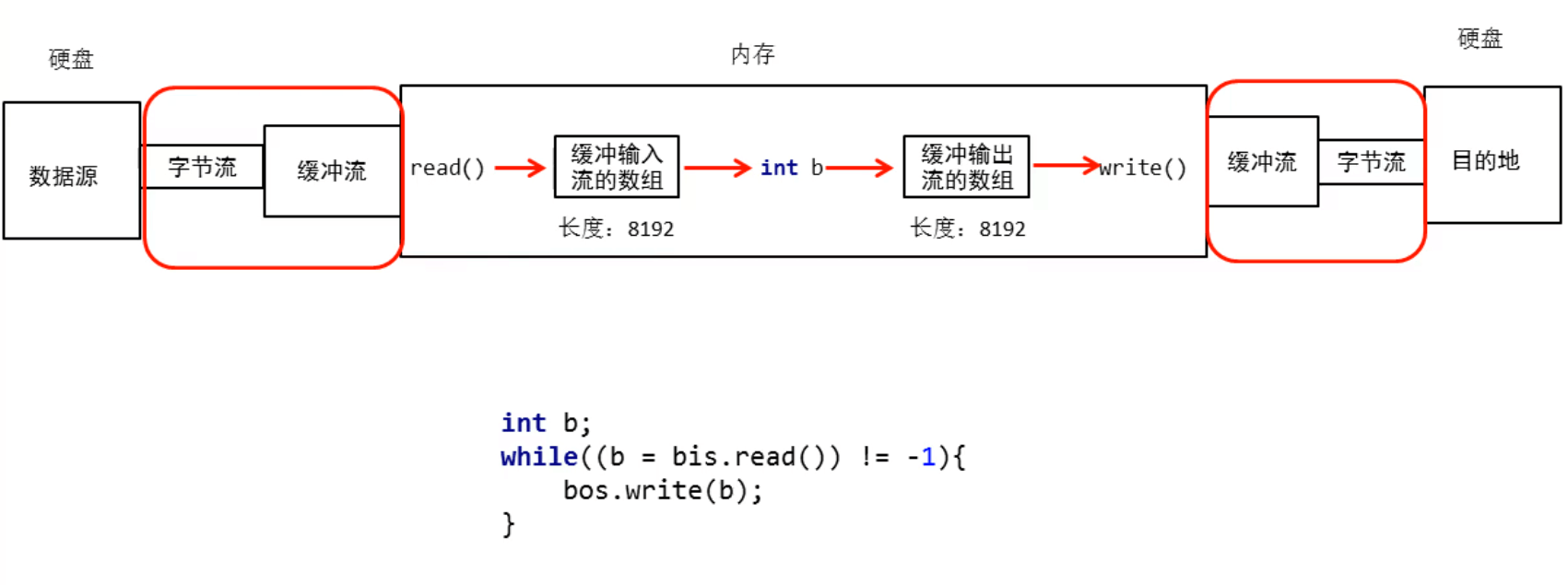
3.2 缓冲流—-一次读写一个字节原理【理解】
- 缓冲流底层如何实现缓冲区的
- 通过定义一个长度为8192的数组来实现缓冲区的
3.3 缓冲流—-一次读写一个字节数组【应用】
- 原理
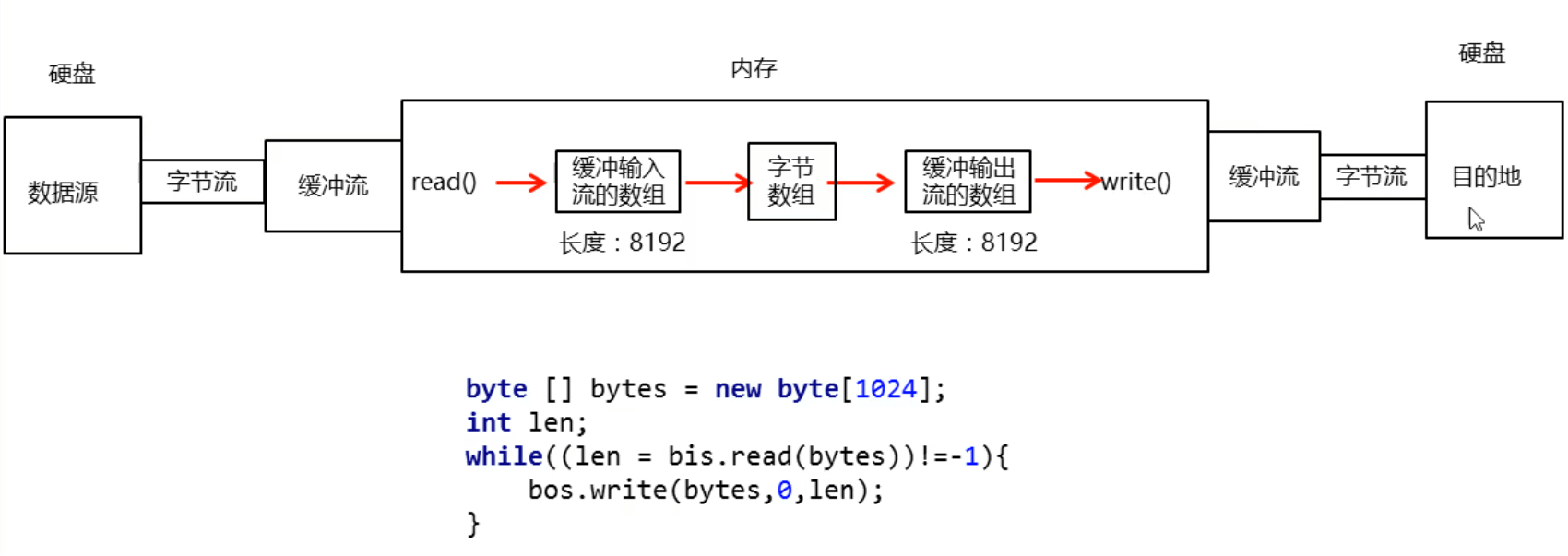
示例代码
public class MainClass {public static void main(String[] args) throws IOException {//创建一个字节缓冲输入流//在底层创建了一个默认长度为8192的字节数组。BufferedInputStream bis = new BufferedInputStream(new FileInputStream("day_11\\file\\test.avi"));//创建一个字节缓冲输出流//在底层也创建了一个默认长度为8192的字节数组。BufferedOutputStream bos = new BufferedOutputStream(new FileOutputStream("day_11\\file\\copyBuf-2.avi"));byte[] bytes = new byte[1024];int len;while ((len = bis.read(bytes)) != -1) {bos.write(bytes,0,len);}bis.close();bos.close();System.out.println("复制完成");}}
3.3 字节流-小结
- 字节流
- 可以操作(拷贝)所有类型的文件
- 字节缓冲流
- 可以提高效率
- 不能直接操作文件,需要传递字节流
- 拷贝文件的四种方式
- 字节流一次读写一个字节
- 字节流一次读写一个字节数组
- 字节缓冲流一次读写一个字节
- 字节缓冲流一次读写一个字节数组
4.字符流
4.1 为什么会出现字符流【理解】
- 字符流的介绍
- 由于字节流操作非英语语言不是特别的方便,所以Java就提供字符流
- 字符流 = 字节流 + 编码表
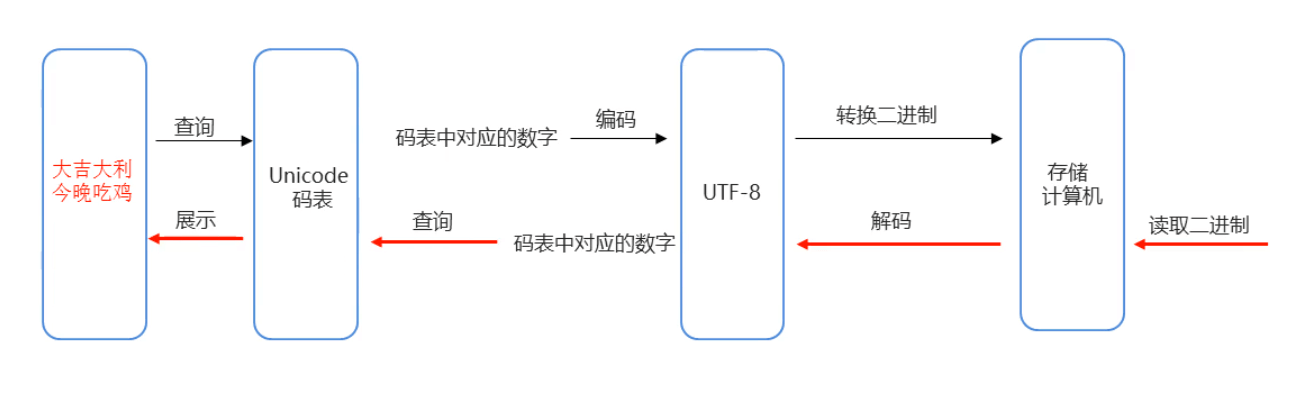
4.2 编码表【理解】
- 什么是编码?
- 字符—————-编码表————————二进制
- 什么是解码?
- 二进制————编码表———————-字符
用什么编码,就要用什么解码,否则会出现乱码
什么是字符集
- 是一个系统支持的所有字符的集合,包括各国家文字、标点符号、图形符号、数字等
- 计算机要准确的存储和识别各种字符集符号,就需要进行字符编码,一套字符集必然至少有一套字符编码。常见字符集有ASCII字符集、GBXXX字符集、Unicode字符集等
- 常见的字符集
- ASCII字符集:
- ASCII:是基于拉丁字母的一套电脑编码系统,用于显示现代英语,主要包括控制字符(回车键、退格、换行键等)和可显示字符(英文大小写字符、阿拉伯数字和西文符号)
- 基本的ASCII字符集,使用7位表示一个字符,共128字符。ASCII的扩展字符集使用8位表示一个字符,共256字符,方便支持欧洲常用字符。是一个系统支持的所有字符的集合,包括各国家文字、标点符号、图形符号、数字等
- GBXXX字符集:
- GBK,最常用的中文码表。是在GB2312标准基础上的扩展规范,使用了双字节编码方案,共收录了21003个汉字,完全兼容GB2312标准,同时支持繁体汉字以及日韩汉字等
- Unicode字符集:
- UTF-8编码:可以用来表示Unicode标准中任意字符,它是电子邮件、网页及其他存储或传送文字的应用 中,优先采用的编码。互联网工程工作小组(IETF)要求所有互联网协议都必须支持UTF-8编码。它使用一至四个字节为每个字符编码
- 编码规则:
- 128个US-ASCII字符,只需一个字节编码
- 拉丁文等字符,需要二个字节编码
- 大部分常用字(含中文),使用三个字节编码
- 其他极少使用的Unicode辅助字符,使用四字节编码
- ASCII字符集:
4.3 字符串中的编码解码问题【应用】
相关方法 | 方法名 | 说明 | | —- | —- | | byte[] getBytes() | 使用平台的默认字符集将该 String编码为一系列字节 | | byte[] getBytes(String charsetName) | 使用指定的字符集将该 String编码为一系列字节 | | String(byte[] bytes) | 使用平台的默认字符集解码指定的字节数组来创建字符串 | | String(byte[] bytes, String charsetName) | 通过指定的字符集解码指定的字节数组来创建字符串 |
代码演示
/*** 字符串的编码和解码*/public class MainClass {public static void main(String[] args) throws UnsupportedEncodingException {String str = "中国";//使用平台的默认字符集将该 String编码为一系列字节,将结果存储到新的字节数组中byte[] bytes1 = str.getBytes();System.out.println(Arrays.toString(bytes1));//使用指定的字符集将该 String编码为一系列字节,将结果存储到新的字节数组中byte[] bytes2 = str.getBytes("UTF-8");System.out.println(Arrays.toString(bytes2));//使用指定的字符集将该 String编码为一系列字节,将结果存储到新的字节数组中byte[] bytes3 = str.getBytes("GBK");System.out.println(Arrays.toString(bytes3));//利用默认的UTF-8进行解码String s1 = new String(bytes1);System.out.println(s1);//利用指定的UTF-8进行解码String s2 = new String(bytes2,"UTF-8");System.out.println(s2);//利用指定的GBK进行解码String s3 = new String(bytes3,"GBK");System.out.println(s3);}}
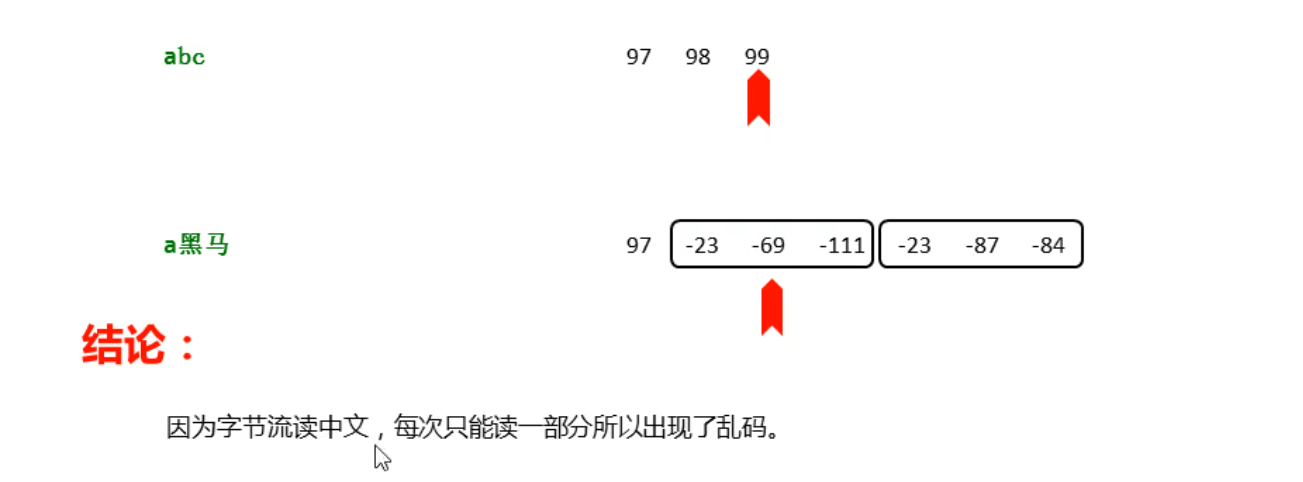
4.4 字节流读取中文出现乱码的原因
- 每次读取一个字节,只是中文的一部分,不是完整的中文,所以会乱码
4.5 字符流
- 字符流 = 字节流 + 编码表
- 汉字在存储的时候,无论选择哪种编码存储,第一个字节都是负数
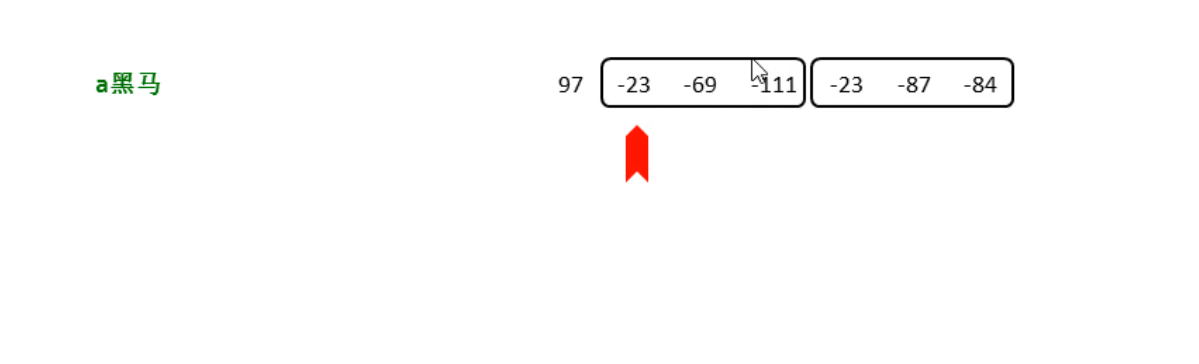
- 结论:
- 想要进行拷贝,一律使用字节流或者字节缓冲流
- 想把文本文件中的数据读到内存中,请使用字符输入流。
- 想把内存中的数据写到文本文件中,请使用字符输出流。
- GBK码表一个中文两个字节,UTF-8编码格式一个中文3个字节
4.6 字符流写数据【应用】
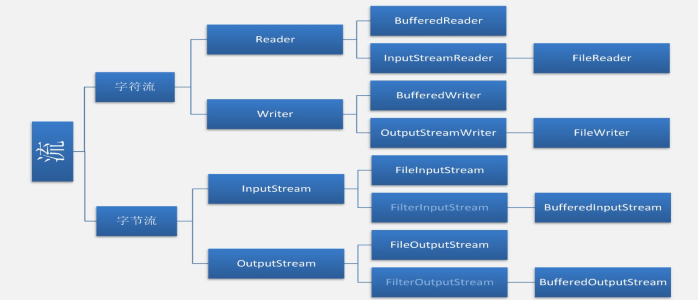
- 介绍
Writer: 用于写入字符流的抽象父类
FileWriter: 用于写入字符流的常用子类 构造方法 | 方法名 | 说明 | | —- | —- | | FileWriter(File file) | 根据给定的 File 对象构造一个 FileWriter 对象 | | FileWriter(File file, boolean append) | 根据给定的 File 对象构造一个 FileWriter 对象 | | FileWriter(String fileName) | 根据给定的文件名构造一个 FileWriter 对象 | | FileWriter(String fileName, boolean append) | 根据给定的文件名以及指示是否附加写入数据的 boolean 值来构造 FileWriter 对象 |
成员方法 | 方法名 | 说明 | | —- | —- | | void write(int c) | 写一个字符 | | void write(char[] cbuf) | 写入一个字符数组 | | void write(char[] cbuf, int off, int len) | 写入字符数组的一部分 | | void write(String str) | 写一个字符串 | | void write(String str, int off, int len) | 写一个字符串的一部分 |
代码演示
/*** 字符流-写方法*/public class MainClass {public static void main(String[] args) throws IOException {Writer writer = new FileWriter("day_12\\file\\demo02.txt");//写一个字符writer.write('a');writer.write(97);writer.write("\r\n");//写出一个字符数组char [] chars1 = {97,98,99,100,101};writer.write(chars1);writer.write("\r\n");//写出字符数组的一部分char [] chars2 = {97,98,99,100,101};writer.write(chars2,0,2);writer.write("\r\n");//写一个字符串writer.write("你好");writer.write("\r\n");//写一个字符串的一部分writer.write("你好",0,1);writer.close();System.out.println("end");}}
4.7 字符流写出数据注意事项
- 如果文件不存在,就创建。但要保证父级路径存在
- 如果文件存在会将内容清空
- 写出int类型的整数,实际写出的是整数在码表上对应的字母
- 有写出字符串的方法,可以直接写出字符串
4.8 刷新和关闭的方法
| 方法名 | 说明 |
|---|---|
| flush() | 刷新流,之后还可以继续写数据 |
| close() | 关闭流,释放资源,但是在关闭之前会先刷新流。一旦关闭,就不能再写数据 |
4.9 字符流读数据【应用】
- 介绍
Reader: 用于读取字符流的抽象父类
FileReader: 用于读取字符流的常用子类 - 构造方法 | 方法名 | 说明 | | —- | —- | | FileReader(File file) | 在给定从中读取数据的 File 的情况下创建一个新 FileReader | | FileReader(String fileName) | 在给定从中读取数据的文件名的情况下创建一个新 FileReader |
成员方法 | 方法名 | 说明 | | —- | —- | | int read() | 一次读一个字符数据 | | int read(char[] cbuf) | 一次读一个字符数组数据 |
代码演示
public class InputStreamReaderDemo {public static void main(String[] args) throws IOException {FileReader fr = new FileReader("myCharStream\\b.txt");//int read():一次读一个字符数据// int ch;// while ((ch=fr.read())!=-1) {// System.out.print((char)ch);// }//int read(char[] cbuf):一次读一个字符数组数据char[] chs = new char[1024];int len;while ((len = fr.read(chs)) != -1) {System.out.print(new String(chs, 0, len));}//释放资源fr.close();}}
4.10 字符流用户注册案例【应用】
- 案例需求
将键盘录入的用户名和密码保存到本地实现永久化存储 - 实现步骤
- 获取用户输入的用户名和密码
- 将用户输入的用户名和密码写入到本地文件中
- 关流,释放资源
代码实现
public class CharStreamDemo8 {public static void main(String[] args) throws IOException {//需求: 将键盘录入的用户名和密码保存到本地实现永久化存储//要求:用户名独占一行,密码独占一行//分析://1,实现键盘录入,把用户名和密码录入进来Scanner sc = new Scanner(System.in);System.out.println("请录入用户名");String username = sc.next();System.out.println("请录入密码");String password = sc.next();//2.分别把用户名和密码写到本地文件。FileWriter fw = new FileWriter("charstream\\a.txt");//将用户名和密码写到文件中fw.write(username);//表示写出一个回车换行符 windows \r\n MacOS \r Linux \nfw.write("\r\n");fw.write(password);//刷新流fw.flush();//3.关流,释放资源fw.close();}}
4.11 字符缓冲输入流【应用】
- 字符缓冲流介绍
- BufferedReader:从字符输入流读取文本,缓冲字符,以提供字符,数组和行的高效读取,可以指定缓冲区大小,或者可以使用默认大小。 默认值足够大,可用于大多数用途。
- 构造方法:
- BufferedReader(Reader in)
- BufferedReader(Reader in, int sz)
- 成员方法:
- 继承父类的成员方法进行使用
代码演示
/*** 字符缓冲输入流*/public class MainClass {public static void main(String[] args) throws IOException {//字符缓冲输入流BufferedReader br = new BufferedReader(new FileReader("day_12\\file\\demo06.txt"));//读取数据char [] chars = new char[1024];int len;while((len = br.read(chars)) != -1){System.out.println(new String(chars,0,len));}br.close();}}
1.12 字符缓冲输出流【应用】
- 字符缓冲输出流的使用
- BufferedWriter:将文本写入字符输出流,缓冲字符,以提供单个字符,数组和字符串的高效写入,可以指定缓冲区大小,或者可以接受默认大小。默认值足够大,可用于大多数用途
- 构造方法:
- BufferedWriter(Writer out)
- BufferedWriter (Writer out, int sz)
- 成员方法:
- 继承父类的成员方法进行使用
代码演示
/*** 字符缓冲输出流*/public class MainClass {public static void main(String[] args) throws IOException {BufferedWriter bw = new BufferedWriter(new FileWriter("day_12\\file\\demo07.txt"));//写出数据//实际写出的是97对应的字符abw.write(97);bw.write("\r\n");//实际写出的是97 - 101 对应的字符 abcdechar [] chars = {97,98,99,100,101};bw.write(chars);bw.write("\r\n");//实际写的是abcbw.write(chars,0,3);bw.write("\r\n");//会把字符串的内容原样写出bw.write("黑马程序员");bw.write("\r\n");//会把字符串的一部分写出 abcdeString line = "abcdefg";bw.write(line,0,5);bw.flush();bw.close();}}
4.13 字符缓冲流特有功能【应用】
方法介绍
BufferedWriter: | 方法名 | 说明 | | —- | —- | | void newLine() | 写一行行分隔符,行分隔符字符串由系统属性定义 |BufferedReader: | 方法名 | 说明 | | —- | —- | | String readLine() | 读一行文字。 结果包含行的内容的字符串,不包括任何行终止字符如果流的结尾已经到达,则为null |
代码演示
public class BufferedStreamDemo02 {public static void main(String[] args) throws IOException {//创建字符缓冲输出流BufferedWriter bw = new BufferedWriter(new FileWriter("myCharStream\\bw.txt"));//写数据for (int i = 0; i < 10; i++) {bw.write("hello" + i);//bw.write("\r\n");bw.newLine();bw.flush();}//释放资源bw.close();//创建字符缓冲输入流BufferedReader br = new BufferedReader(new FileReader("myCharStream\\bw.txt"));String line;while ((line=br.readLine())!=null) {System.out.println(line);}br.close();}}
4.14 字符缓冲流操作文件中数据排序案例【应用】
- 案例需求
使用字符缓冲流读取文件中的数据,排序后再次写到本地文件 - 实现步骤
- 将文件中的数据读取到程序中
- 对读取到的数据进行处理
- 将处理后的数据添加到集合中
- 对集合中的数据进行排序
- 将排序后的集合中的数据写入到文件中
代码实现
public class CharStreamDemo14 {public static void main(String[] args) throws IOException {//需求:读取文件中的数据,排序后再次写到本地文件//分析://1.要把文件中的数据读取进来。BufferedReader br = new BufferedReader(new FileReader("charstream\\sort.txt"));//输出流一定不能写在这里,因为会清空文件中的内容//BufferedWriter bw = new BufferedWriter(new FileWriter("charstream\\sort.txt"));String line = br.readLine();System.out.println("读取到的数据为" + line);br.close();//2.按照空格进行切割String[] split = line.split(" ");//9 1 2 5 3 10 4 6 7 8//3.把字符串类型的数组变成int类型int [] arr = new int[split.length];//遍历split数组,可以进行类型转换。for (int i = 0; i < split.length; i++) {String smallStr = split[i];//类型转换int number = Integer.parseInt(smallStr);//把转换后的结果存入到arr中arr[i] = number;}//4.排序Arrays.sort(arr);System.out.println(Arrays.toString(arr));//5.把排序之后结果写回到本地 1 2 3 4...BufferedWriter bw = new BufferedWriter(new FileWriter("charstream\\sort.txt"));//写出for (int i = 0; i < arr.length; i++) {bw.write(arr[i] + " ");bw.flush();}//释放资源bw.close();}}
4.15 IO流小结【理解】
- IO流小结
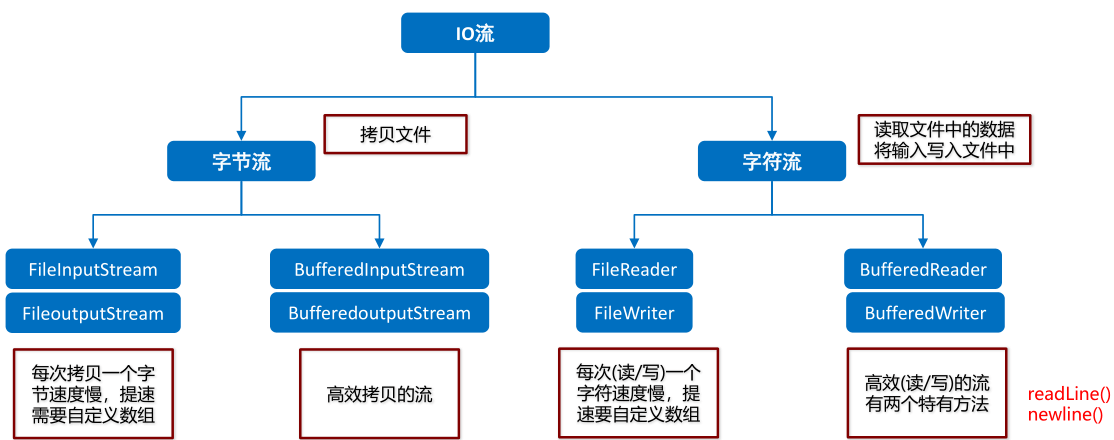
5.转换流
5.1 字符流中和编码解码问题相关的两个类【理解】
- InputStreamReader:是从字节流到字符流的桥梁,父类是Reader
它读取字节,并使用指定的编码将其解码为字符
它使用的字符集可以由名称指定,也可以被明确指定,或者可以接受平台的默认字符集 - OutputStreamWriter:是从字符流到字节流的桥梁,父类是Writer
是从字符流到字节流的桥梁,使用指定的编码将写入的字符编码为字节
它使用的字符集可以由名称指定,也可以被明确指定,或者可以接受平台的默认字符集
5.2 转换流读写数据【应用】
构造方法 | 方法名 | 说明 | | —- | —- | | InputStreamReader(InputStream in) | 使用默认字符编码创建InputStreamReader对象 | | InputStreamReader(InputStream in,String chatset) | 使用指定的字符编码创建InputStreamReader对象 | | OutputStreamWriter(OutputStream out) | 使用默认字符编码创建OutputStreamWriter对象 | | OutputStreamWriter(OutputStream out,String charset) | 使用指定的字符编码创建OutputStreamWriter对象 |
代码演示-转换流
/*** 转换输入流,字节转换为字符* 转换输出流,字符转换为字节*/public class MainClass1 {public static void main(String[] args) throws IOException {//发生了乱码,因为demo10.txt文件的编码是GBK,IDEA中程序处理默认是UTF-8/*FileReader fr = new FileReader("day_12\\file\\demo10.txt");int ch;while ((ch = fr.read())!=-1){System.out.println((char)ch);}fr.close();*///采用转换流指定编码格式/*InputStreamReader isr = new InputStreamReader(new FileInputStream("day_12\\file\\demo10.txt"),"GBK");int ch;while ((ch = isr.read())!=-1){System.out.print((char)ch);}isr.close();*///JDK11后FileReader,支持指定编码格式FileReader fr = new FileReader("day_12\\file\\demo10.txt",Charset.forName("GBK"));int c;while ((c = fr.read())!=-1){System.out.print((char)c);}fr.close();}}
代码演示-转换流
/*** 转换输入流,字符转换为字节* 转换输出流,字节转换为字符*/public class MainClass2 {public static void main(String[] args) throws IOException {//采用转换流指定编码格式/* InputStreamReader isr = new InputStreamReader(new FileInputStream("day_12\\file\\demo10.txt"),"GBK");OutputStreamWriter osw = new OutputStreamWriter(new FileOutputStream("day_12\\file\\demo10-2.txt"),"UTF-8");int ch;while ((ch = isr.read())!=-1){osw.write(ch);}isr.close();osw.close();*///JDK11后FileWriter,支持指定编码格式FileReader fr = new FileReader("day_12\\file\\demo10.txt", Charset.forName("GBK"));FileWriter fw = new FileWriter("day_12\\file\\demo10-2.txt",Charset.forName("UTF-8"));int c;while ((c = fr.read())!=-1){fw.write(c);}fr.close();fw.close();}}
6.对象操作流
可以把对象以字节的形式写到本地文件,直接打开文件,是读不懂的,需要再次用到对象操作流到内存中
6.1 对象序列化流【应用】
- 对象序列化介绍
- 对象序列化:就是将对象保存到磁盘中,或者在网络中传输对象
- 这种机制就是使用一个字节序列表示一个对象,该字节序列包含:对象的类型、对象的数据和对象中存储的属性等信息
- 字节序列写到文件之后,相当于文件中持久保存了一个对象的信息
- 反之,该字节序列还可以从文件中读取回来,重构对象,对它进行反序列化
- 对象序列化流: ObjectOutputStream
- 将Java对象的原始数据类型和图形写入OutputStream。 可以使用ObjectInputStream读取(重构)对象。 可以通过使用流的文件来实现对象的持久存储。 如果流是网络套接字流,则可以在另一个主机上或另一个进程中重构对象
构造方法 | 方法名 | 说明 | | —- | —- | | ObjectOutputStream(OutputStream out) | 创建一个写入指定的OutputStream的ObjectOutputStream |
序列化对象的方法 | 方法名 | 说明 | | —- | —- | | void writeObject(Object obj) | 将指定的对象写入ObjectOutputStream |
示例代码
学生类public class Student implements Serializable {private String name;private int age;public Student() {}public Student(String name, int age) {this.name = name;this.age = age;}public String getName() {return name;}public void setName(String name) {this.name = name;}public int getAge() {return age;}public void setAge(int age) {this.age = age;}@Overridepublic String toString() {return "Student{" +"name='" + name + '\'' +", age=" + age +'}';}}
测试类
public class ObjectOutputStreamDemo {public static void main(String[] args) throws IOException {//创建一个写入指定的OutputStream的ObjectOutputStreamObjectOutputStream oos = new ObjectOutputStream(new FileOutputStream("myOtherStream\\oos.txt"));//创建对象Student s = new Student("佟丽娅",30);//将指定的对象写入ObjectOutputStreamoos.writeObject(s);//释放资源oos.close();}}
注意事项
- 一个对象要想被序列化,该对象所属的类必须必须实现Serializable 接口
- Serializable是一个标记接口,实现该接口,不需要重写任何方法
6.2 对象反序列化流【应用】
- 对象反序列化流: ObjectInputStream
- ObjectInputStream反序列化先前使用ObjectOutputStream编写的原始数据和对象
构造方法 | 方法名 | 说明 | | —- | —- | | ObjectInputStream(InputStream in) | 创建从指定的InputStream读取的ObjectInputStream |
反序列化对象的方法 | 方法名 | 说明 | | —- | —- | | Object readObject() | 从ObjectInputStream读取一个对象 |
示例代码
public class ObjectInputStreamDemo {public static void main(String[] args) throws IOException, ClassNotFoundException {//ObjectInputStream(InputStream in):创建从指定的InputStream读取的ObjectInputStreamObjectInputStream ois = new ObjectInputStream(new FileInputStream("myOtherStream\\oos.txt"));//Object readObject():从ObjectInputStream读取一个对象Object obj = ois.readObject();Student s = (Student) obj;System.out.println(s.getName() + "," + s.getAge());ois.close();}}
6.3 serialVersionUID&transient【应用】
- serialVersionUID
- 用对象序列化流序列化了一个对象后,假如我们修改了对象所属的类文件,读取数据会不会出问题呢?
- 会出问题,会抛出InvalidClassException异常
- 如果出问题了,如何解决呢?
- 重新序列化
- 给对象所属的类加一个serialVersionUID
- private static final long serialVersionUID = 42L;
- 用对象序列化流序列化了一个对象后,假如我们修改了对象所属的类文件,读取数据会不会出问题呢?
- transient
- 如果一个对象中的某个成员变量的值不想被序列化,又该如何实现呢?
- 给该成员变量加transient关键字修饰,该关键字标记的成员变量不参与序列化过程
- 如果一个对象中的某个成员变量的值不想被序列化,又该如何实现呢?
示例代码
学生类public class Student implements Serializable {private static final long serialVersionUID = 42L;private String name;private transient int age;public Student() {}public Student(String name, int age) {this.name = name;this.age = age;}public String getName() {return name;}public void setName(String name) {this.name = name;}public int getAge() {return age;}public void setAge(int age) {this.age = age;}@Overridepublic String toString() {return "Student{" +"name='" + name + '\'' +", age=" + age +'}';}}
测试类
public class ObjectStreamDemo {public static void main(String[] args) throws IOException, ClassNotFoundException {// write();read();}//反序列化private static void read() throws IOException, ClassNotFoundException {ObjectInputStream ois = new ObjectInputStream(new FileInputStream("myOtherStream\\oos.txt"));Object obj = ois.readObject();Student s = (Student) obj;System.out.println(s.getName() + "," + s.getAge());ois.close();}//序列化private static void write() throws IOException {ObjectOutputStream oos = new ObjectOutputStream(new FileOutputStream("myOtherStream\\oos.txt"));Student s = new Student("佟丽娅", 30);oos.writeObject(s);oos.close();}}
6.4 对象操作流练习【应用】
- 案例需求
创建多个学生类对象写到文件中,再次读取到内存中 - 实现步骤
- 创建序列化流对象
- 创建多个学生对象
- 将学生对象添加到集合中
- 将集合对象序列化到文件中
- 创建反序列化流对象
- 将文件中的对象数据,读取到内存中
代码实现
学生类public class Student implements Serializable{private static final long serialVersionUID = 2L;private String name;private int age;public Student() {}public Student(String name, int age) {this.name = name;this.age = age;}public String getName() {return name;}public void setName(String name) {this.name = name;}public int getAge() {return age;}public void setAge(int age) {this.age = age;}}
测试类
/*** 序列化练习*/public class MainClass {public static void main(String[] args) throws Exception {//write();read();}private static void read() throws IOException, ClassNotFoundException {ObjectInputStream ois = new ObjectInputStream(new FileInputStream("day_12\\file\\a.txt"));ArrayList<Student> list2 = (ArrayList<Student>) ois.readObject();for (Student student : list2) {System.out.println(student);}ois.close();}private static void write() throws Exception {/*** 如果要序列化的对象有多个,不建议直接将多个对象序列化到文件中,因为反序列化时容易出异常* 建议: 将要序列化的多个对象存储到集合中,然后将集合序列化到文件中*/Student s1 = new Student("杜子腾",16);Student s2 = new Student("张三",23);Student s3 = new Student("李四",24);ObjectOutputStream oos = new ObjectOutputStream(new FileOutputStream("day_12\\file\\a.txt"));ArrayList<Student> list = new ArrayList<>();list.add(s1);list.add(s2);list.add(s3);//我们往本地文件中写的就是一个集合oos.writeObject(list);oos.close();}}
7.Properties集合
7.1 Properties作为Map集合的使用【应用】
- Properties介绍
- 是一个Map体系的集合类
- Properties可以保存到流中或从流中加载
- 属性列表中的每个键及其对应的值都是一个字符串
7.2 Properties基本使用
public class PropertiesDemo01 {public static void main(String[] args) {//创建集合对象Properties prop = new Properties();//存储元素prop.put("itheima001", "佟丽娅");prop.put("itheima002", "赵丽颖");prop.put("itheima003", "刘诗诗");//遍历集合Set<Object> keySet = prop.keySet();for (Object key : keySet) {Object value = prop.get(key);System.out.println(key + "," + value);}}}
7.3 Properties作为Map集合的特有方法【应用】
特有方法 | 方法名 | 说明 | | —- | —- | | Object setProperty(String key, String value) | 设置集合的键和值,都是String类型,底层调用 Hashtable方法 put | | String getProperty(String key) | 使用此属性列表中指定的键搜索属性 | | Set stringPropertyNames() | 从该属性列表中返回一个不可修改的键集,其中键及其对应的值是字符串 |
示例代码 ```java /**
特有方法 */ public class MainClass { public static void main(String[] args) {
//Object setProperty(String key, String value) --- put//设置集合的键和值,都是String类型,底层调用 Hashtable方法 putProperties prop = new Properties();prop.setProperty("江苏","南京");prop.setProperty("安徽","南京");prop.setProperty("山东","济南");System.out.println(prop);System.out.println("---------------------");//String getProperty(String key) --- get//使用此属性列表中指定的键搜索属性
String value = prop.getProperty(“江苏”);
System.out.println(value);System.out.println("--------------------");
//Set<String> stringPropertyNames() --- keySet//从该属性列表中返回一个不可修改的键集,其中键及其对应的值是字符串Set<String> keys = prop.stringPropertyNames();for (String key : keys) {String val = prop.getProperty(key);System.out.println(key + "=" + val);}}
}
<a name="6ca29cf0"></a>### 7.4 Properties和IO流相结合的方法【应用】- 和IO流结合的方法| 方法名 | 说明 || --- | --- || void load(Reader reader) | 从输入字符流读取属性列表(键和元素对) || void store(Writer writer, String comments) | 将此属性列表(键和元素对)写入此 Properties表中,以适合使用 load(Reader)方法的格式写入输出字符流 |- 示例代码-load方法的使用```java/*** Properties 加载文件*/public class MainClass {public static void main(String[] args) throws IOException {Properties prop = new Properties();FileReader fr = new FileReader("day_12\\file\\prop.properties");//将本地文件中的键值对数据读取到集合中//调用完了load方法之后,文件中的键值对数据已经在集合中了.prop.load(fr);fr.close();System.out.println(prop);}}
- 示例代码-store方法的使用
/*** Properties 写入文件*/public class MainClass2 {public static void main(String[] args) throws IOException {Properties prop = new Properties();prop.setProperty("username","zhangsan");prop.setProperty("password","123");prop.setProperty("db","mysql");FileWriter fw = new FileWriter("day_12\\file\\prop-db.properties");//将集合中的数据以键值对形式保存在本地prop.store(fw,"db config");fw.close();System.out.println(prop);}}
7.5 Properties集合练习【应用】
- 案例需求
在Properties文件中手动写上姓名和年龄,读取到集合中,将该数据封装成学生对象,写到本地文件 - 实现步骤
- 创建Properties集合,将本地文件中的数据加载到集合中
- 获取集合中的键值对数据,封装到学生对象中
- 创建序列化流对象,将学生对象序列化到本地文件中
代码实现
学生类public class Student implements Serializable {private static final long serialVersionUID = 1L;private String name;private int age;public Student() {}public Student(String name, int age) {this.name = name;this.age = age;}public String getName() {return name;}public void setName(String name) {this.name = name;}public int getAge() {return age;}public void setAge(int age) {this.age = age;}@Overridepublic String toString() {return "Student{" +"name='" + name + '\'' +", age=" + age +'}';}}
测试类
public class Test {public static void main(String[] args) throws IOException {//1.创建Properties集合,将本地文件中的数据加载到集合中Properties prop = new Properties();FileReader fr = new FileReader("prop.properties");prop.load(fr);fr.close();//2.获取集合中的键值对数据,封装到学生对象中String name = prop.getProperty("name");int age = Integer.parseInt(prop.getProperty("age"));Student s = new Student(name,age);//3.创建序列化流对象,将学生对象序列化到本地文件中ObjectOutputStream oos = new ObjectOutputStream(new FileOutputStream("a.txt"));oos.writeObject(s);oos.close();}}

若有收获,就点个赞吧
0 人点赞


