Spring initApplicationEventMulticaster
- Author: HuiFer
- 源码阅读仓库: SourceHot-Spring
demo
package com.huifer.source.spring.applicationListener;import org.springframework.context.ApplicationEvent;import org.springframework.context.ApplicationListener;public class DemoApplicationListener implements ApplicationListener {@Overridepublic void onApplicationEvent(ApplicationEvent event) {System.out.println("com.huifer.source.spring.applicationListener.DemoApplicationListener.onApplicationEvent");}}
<?xml version="1.0" encoding="UTF-8"?><beans xmlns:xsi="http://www.w3.org/2001/XMLSchema-instance"xmlns="http://www.springframework.org/schema/beans"xsi:schemaLocation="http://www.springframework.org/schema/beans http://www.springframework.org/schema/beans/spring-beans.xsd"><bean id="demoApplicationListener" class="com.huifer.source.spring.applicationListener.DemoApplicationListener"/></beans>
public class ListenerSourceCode {public static void main(String[] args) {ApplicationContext context = new ClassPathXmlApplicationContext("Listener-demo.xml");}}
初始化入口
org.springframework.context.support.AbstractApplicationContext.refresh中的initApplicationEventMulticaster方法
protected void initApplicationEventMulticaster() {ConfigurableListableBeanFactory beanFactory = getBeanFactory();// 判断是否存在名字applicationEventMulticaster的beanif (beanFactory.containsLocalBean(APPLICATION_EVENT_MULTICASTER_BEAN_NAME)) {this.applicationEventMulticaster =beanFactory.getBean(APPLICATION_EVENT_MULTICASTER_BEAN_NAME, ApplicationEventMulticaster.class);if (logger.isTraceEnabled()) {logger.trace("Using ApplicationEventMulticaster [" + this.applicationEventMulticaster + "]");}}else {// 创建一个this.applicationEventMulticaster = new SimpleApplicationEventMulticaster(beanFactory);beanFactory.registerSingleton(APPLICATION_EVENT_MULTICASTER_BEAN_NAME, this.applicationEventMulticaster);if (logger.isTraceEnabled()) {logger.trace("No '" + APPLICATION_EVENT_MULTICASTER_BEAN_NAME + "' bean, using " +"[" + this.applicationEventMulticaster.getClass().getSimpleName() + "]");}}}
注册
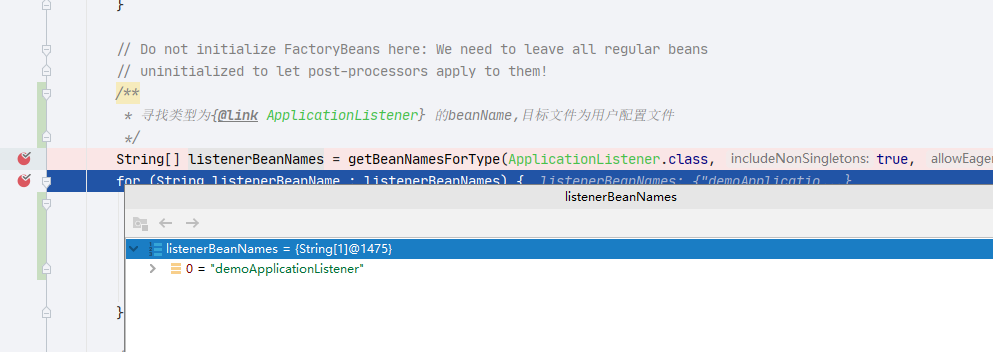
protected void registerListeners() {// Register statically specified listeners first.// 读取 ApplicationListenerfor (ApplicationListener<?> listener : getApplicationListeners()) {getApplicationEventMulticaster().addApplicationListener(listener);}// Do not initialize FactoryBeans here: We need to leave all regular beans// uninitialized to let post-processors apply to them!/*** 寻找类型为{@link ApplicationListener} 的beanName,目标文件为用户配置文件*/String[] listenerBeanNames = getBeanNamesForType(ApplicationListener.class, true, false);for (String listenerBeanName : listenerBeanNames) {/*** 1. 获取 {@link applicationEventMulticaster}* 2. 添加监听器名称*/getApplicationEventMulticaster().addApplicationListenerBean(listenerBeanName);}// Publish early application events now that we finally have a multicaster...Set<ApplicationEvent> earlyEventsToProcess = this.earlyApplicationEvents;this.earlyApplicationEvents = null;if (earlyEventsToProcess != null) {for (ApplicationEvent earlyEvent : earlyEventsToProcess) {getApplicationEventMulticaster().multicastEvent(earlyEvent);}}}
finishRefresh 发布
protected void finishRefresh() {// Clear context-level resource caches (such as ASM metadata from scanning).clearResourceCaches();// Initialize lifecycle processor for this context.initLifecycleProcessor();// Propagate refresh to lifecycle processor first.getLifecycleProcessor().onRefresh();// Publish the final event.// 发布事件做处理publishEvent(new ContextRefreshedEvent(this));// Participate in LiveBeansView MBean, if active.LiveBeansView.registerApplicationContext(this);}
org.springframework.context.support.AbstractApplicationContext#publishEvent(org.springframework.context.ApplicationEvent)org.springframework.context.support.AbstractApplicationContext#publishEvent(java.lang.Object, org.springframework.core.ResolvableType)
protected void publishEvent(Object event, @Nullable ResolvableType eventType) {Assert.notNull(event, "Event must not be null");// Decorate event as an ApplicationEvent if necessaryApplicationEvent applicationEvent;if (event instanceof ApplicationEvent) {applicationEvent = (ApplicationEvent) event;}else {applicationEvent = new PayloadApplicationEvent<>(this, event);if (eventType == null) {eventType = ((PayloadApplicationEvent<?>) applicationEvent).getResolvableType();}}// Multicast right now if possible - or lazily once the multicaster is initializedif (this.earlyApplicationEvents != null) {this.earlyApplicationEvents.add(applicationEvent);}else {/*** 执行监听事件* {@link ApplicationEventMulticaster} ->{@link SimpleApplicationEventMulticaster}*/getApplicationEventMulticaster().multicastEvent(applicationEvent, eventType);}// Publish event via parent context as well...if (this.parent != null) {if (this.parent instanceof AbstractApplicationContext) {((AbstractApplicationContext) this.parent).publishEvent(event, eventType);}else {this.parent.publishEvent(event);}}}
- 执行监听方法

protected void invokeListener(ApplicationListener<?> listener, ApplicationEvent event) {ErrorHandler errorHandler = getErrorHandler();if (errorHandler != null) {try {doInvokeListener(listener, event);}catch (Throwable err) {errorHandler.handleError(err);}}else {doInvokeListener(listener, event);}}
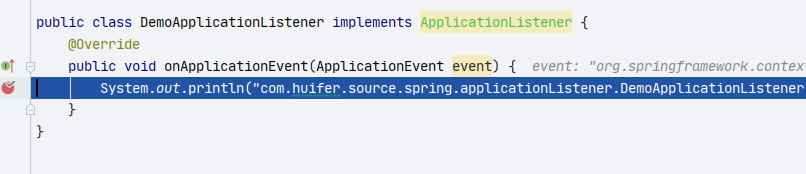
@SuppressWarnings({"rawtypes", "unchecked"})private void doInvokeListener(ApplicationListener listener, ApplicationEvent event) {try {// 最后调用方法listener.onApplicationEvent(event);}catch (ClassCastException ex) {String msg = ex.getMessage();if (msg == null || matchesClassCastMessage(msg, event.getClass())) {// Possibly a lambda-defined listener which we could not resolve the generic event type for// -> let's suppress the exception and just log a debug message.Log logger = LogFactory.getLog(getClass());if (logger.isTraceEnabled()) {logger.trace("Non-matching event type for listener: " + listener, ex);}}else {throw ex;}}}


若有收获,就点个赞吧
0 人点赞


